TunnelBear VPN
The birth of the PolarBear SDK, powering millions of VPN connections

TunnelBear is a virtual private network (VPN) service that makes using VPN fun, while protecting users privacy on the internet. It was founded in 2011 in Toronto, Canada, by Ryan Dochuk and Daniel Kaldor with the goal of simplifying VPN technology so that everyday users could protect their online privacy without complicated setup.
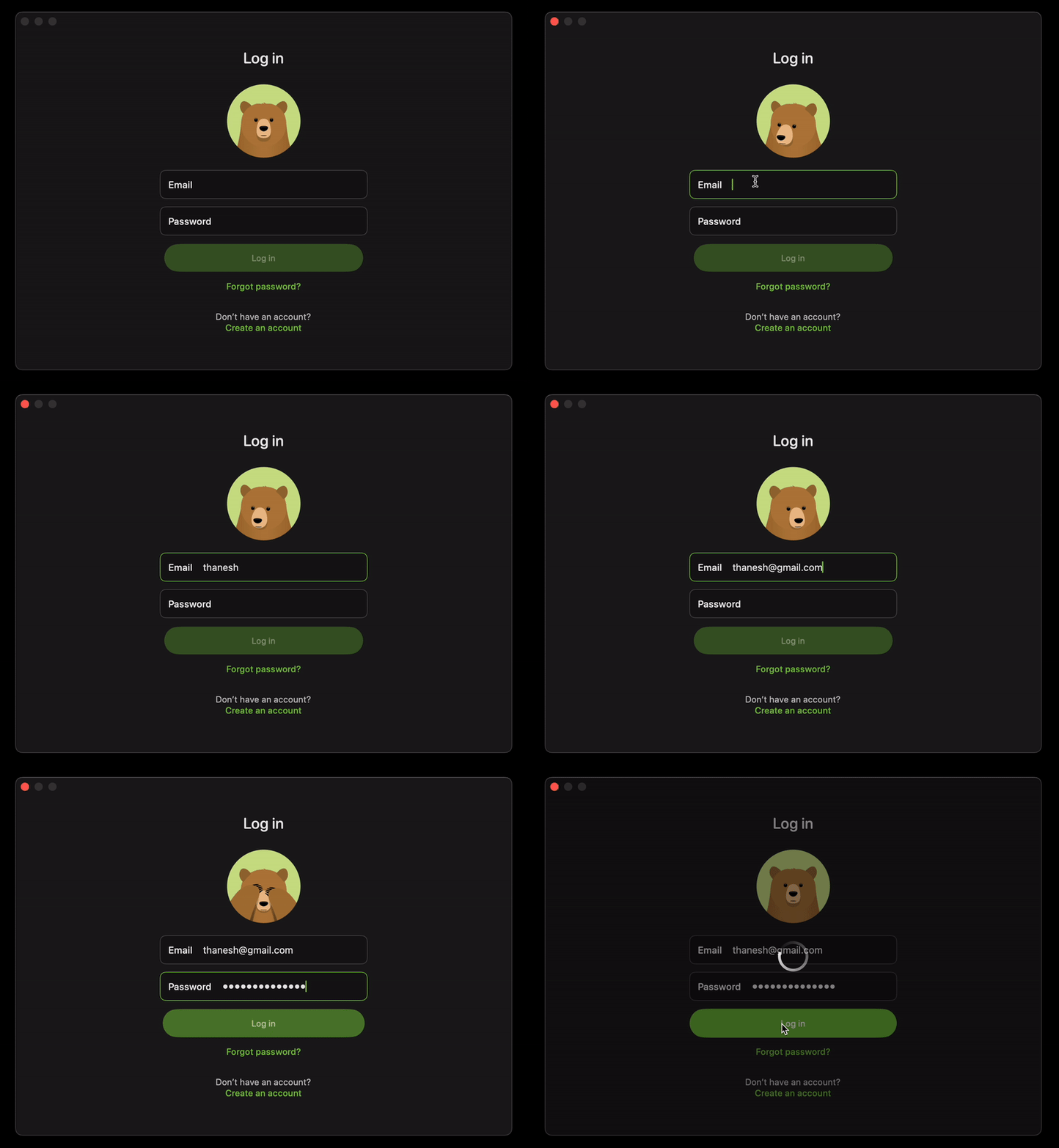
Culture at TunnelBear
To this day, TunnelBear stands out as the most memorable company I’ve been part of, largely because of its culture. From the moment I met Ryan Dochuk and he gave me a tour of the office, introducing me to a few people along the way, I felt an immediate connection. I fell in love with the company, and more importantly, the culture. It wasn’t just that people were friendly; it genuinely felt like a unit. There were so many sharp engineers, and whenever a problem came up, someone was always ready to jump in and help, almost instinctively. It felt like everyone was operating in sync. TunnelBear had a real talent for building and sustaining that kind of environment.
I loved the weekly lunch-and-learns and the random donut pairings, where you’d head to a nearby coffee shop and get to know coworkers beyond just their job titles. It even surprised me to learn the company had a tab open there, so you never had to think twice about paying for your coffee—small gestures that made it clear people were trusted and cared for. Underneath all of that was a shared belief that protecting users’ privacy truly mattered. It wasn’t a slogan or a checkbox, but something that showed up in everyday conversations, product decisions, and how we built software.
Product Vision
When I joined TunnelBear, it was still very much a standalone product. It was acquired by McAfee in 2018 and was going through the integration with McAfee. The vision for my role was crystal clear: extract the core connection logic, VPN protocols, and analytics into a separate SDK. We named it the PolarBear SDK. The goal was to bring the VPN goodness TunnelBear had built to 10 million users and eventually to 100 million users. That clarity made it easy for me to focus on expanding the VPN platform itself. At the time, TunnelBear had around 1 million monthly active users across free and paid tiers.
Problem
Over the course of my product career, I learned, sometimes the hard way, that you can’t build product strategy in a vacuum. The starting point always has to be real customer needs, and the plan needs to emerge from there. In this case, I effectively had three customers to serve: TunnelBear itself, McAfee, and McAfee’s partners.
To make sense of the problem, I broke it down into four core layers.
- The first was the UI layer. The client applications on iOS, Android, macOS, and Windows.
- The second was the connection logic and analytics that lived alongside the UI and shipped with each client.
- The third was the backend layer, responsible for authentication, subscriptions, server selection, payments, and other core services.
- The fourth layer was the infrastructure itself: the physical servers running the VPN and handling client connections.
Solution
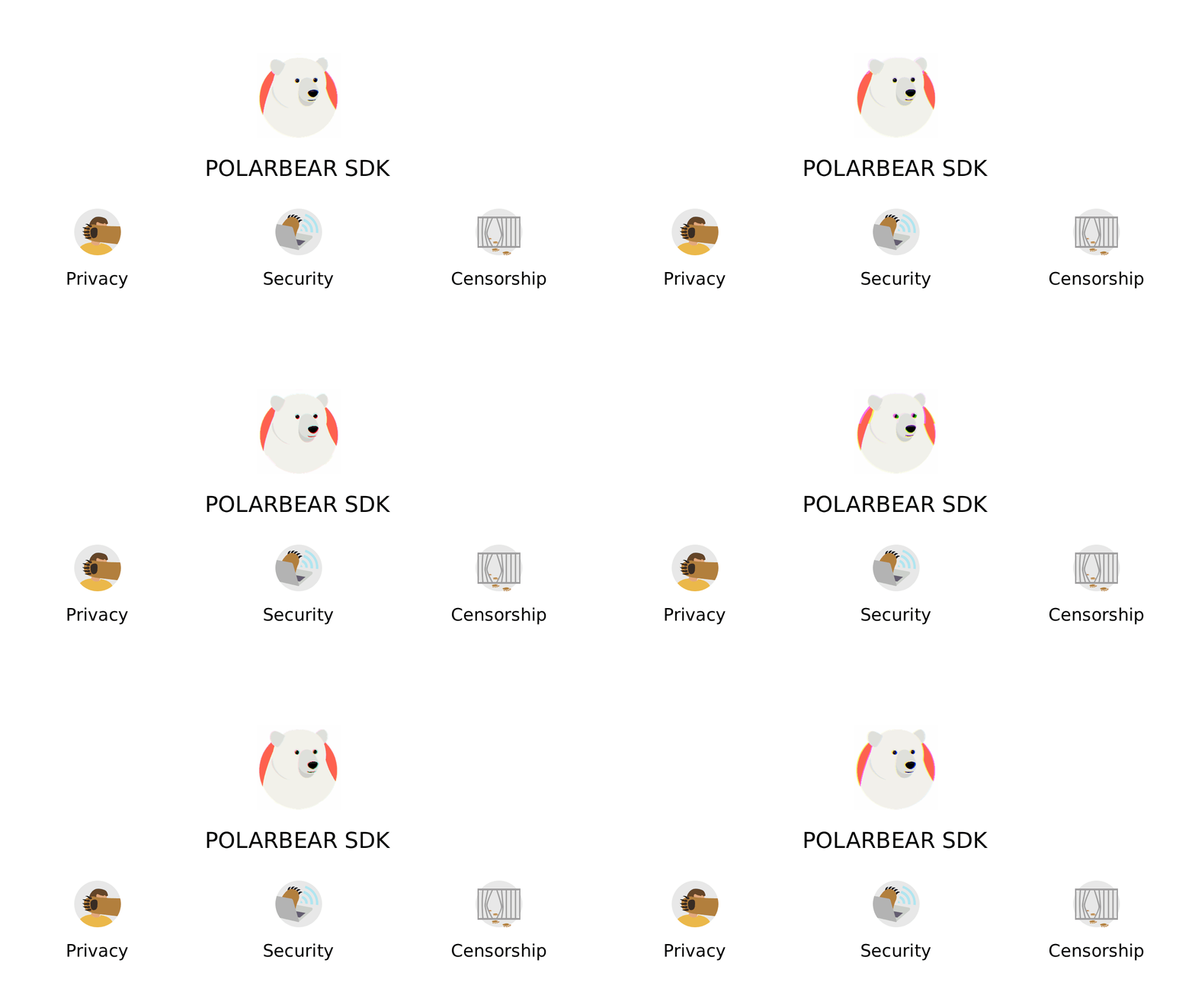
The goal was to cleanly separate the SDK and backend layers so they could be reused across products and partners. That meant rebuilding our connection analytics from the ground up as part of the SDK, extracting VPN protocols and core connection logic into a shared foundation, and making it all consumable by others. We built a developer portal to clearly communicate SDK capabilities and integration paths, and we ensured the backend could reliably authenticate and route traffic not just for TunnelBear, but for McAfee and partner users as well.
This layered approach gave us the flexibility to scale beyond a single product, while keeping the core experience consistent and reliable as we pushed toward much larger distribution. With every plan and every change, we had to think about protecting user’s privacy. So, it was not a slam dunk SDK to build.
This is how the PolarBear SDK and backend was born.
Transparency
A defining part of working at TunnelBear was that this architecture was never treated as a black box. The system, its layers, and their interactions were transparently and rigorously reviewed through annual independent security audits. For reference, here is a public audit report from Cure53, an independent and well-regarded German security research firm, completed during my time at the company.
Execution
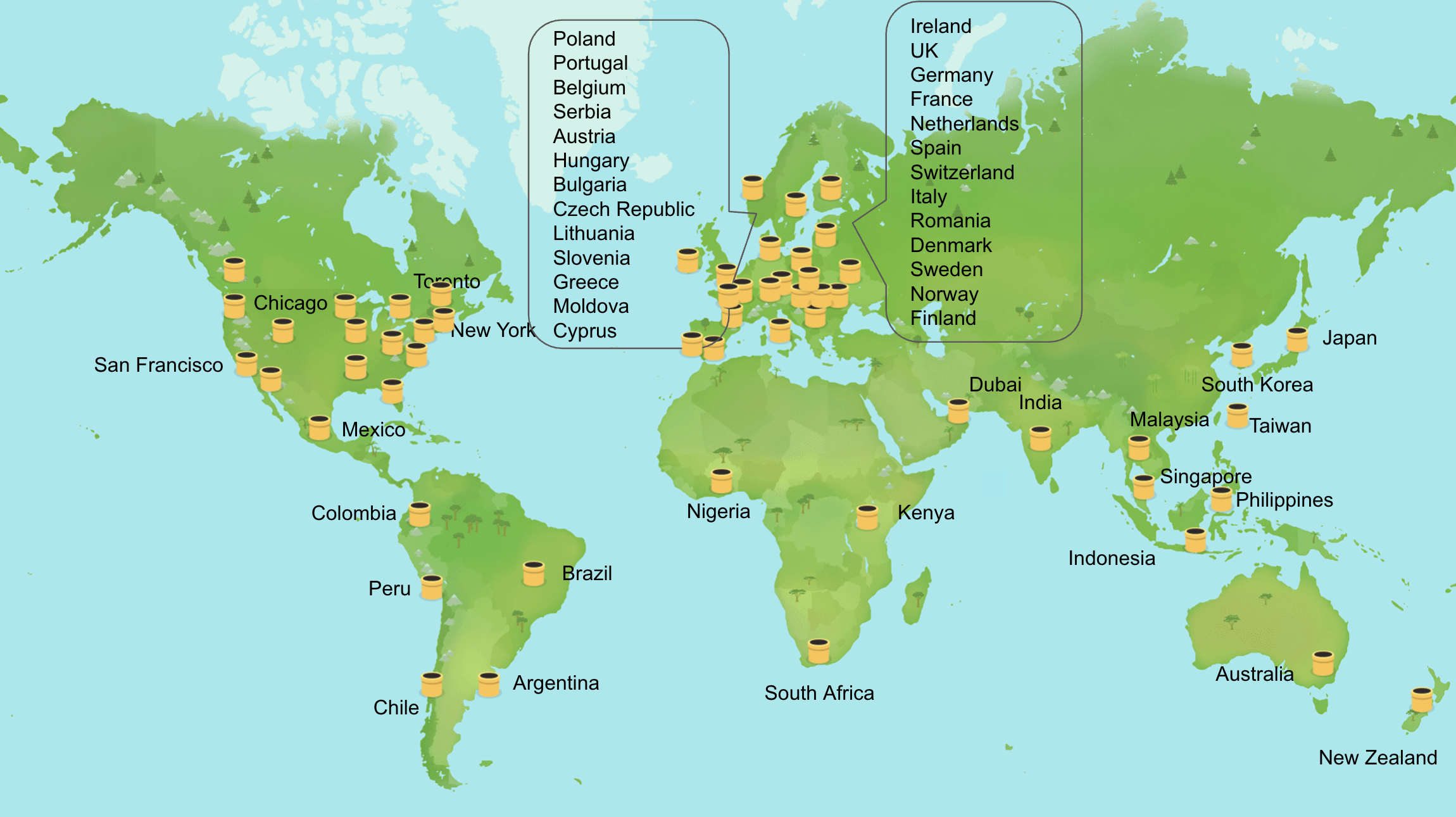
By the end of 2021, 5 million+ VPN subscribers were using the SDK, with McAfee and partner user bases continuing to grow steadily. The new connection analytics and backend systems were fully in place, giving us the visibility and reliability needed to operate at scale. We expanded our infrastructure footprint from 22 countries to 50, significantly improving global coverage and performance, and rolled out the WireGuard VPN protocol to modernize our connection stack.
As a result, VPN evolved into a core offering across McAfee’s product suite. The same was true for partner integrations ranging from large OEMs like Dell and HP to telecom providers in the US and internationally where VPN became a foundational feature.
My contribution as a product manager at TunnelBear
- Led the product strategy, requirements and development of VPN SDKs (iOS, Android, macOS, Windows) powering partner integrations
- Integrated privacy first analytics, enabling data driven growth while safeguarding user privacy
- Drove $XXXM+ in VPN partnership revenue and reduced operating costs through SDK adoption
- Scaled VPN infrastructure to 50 countries. Evaluated and launched VPN protocols (i.e. OpenVPN, WireGuard) and optimized latency
- Coached and developed senior PMs for TunnelBear’s front end products, elevating product discovery and delivery
Credits
- The talented design team for the outstanding visuals and creative direction
- The backend and frontend engineers who brought the product to life
- The customer support team for managing user communications, payments, and reviews. Most importantly, for keeping me closely informed on real user feedback that shaped our decisions
- Leadership and guidance from Ryan, John, Ivan, Rod, Mark, and Chris (McAfee)